
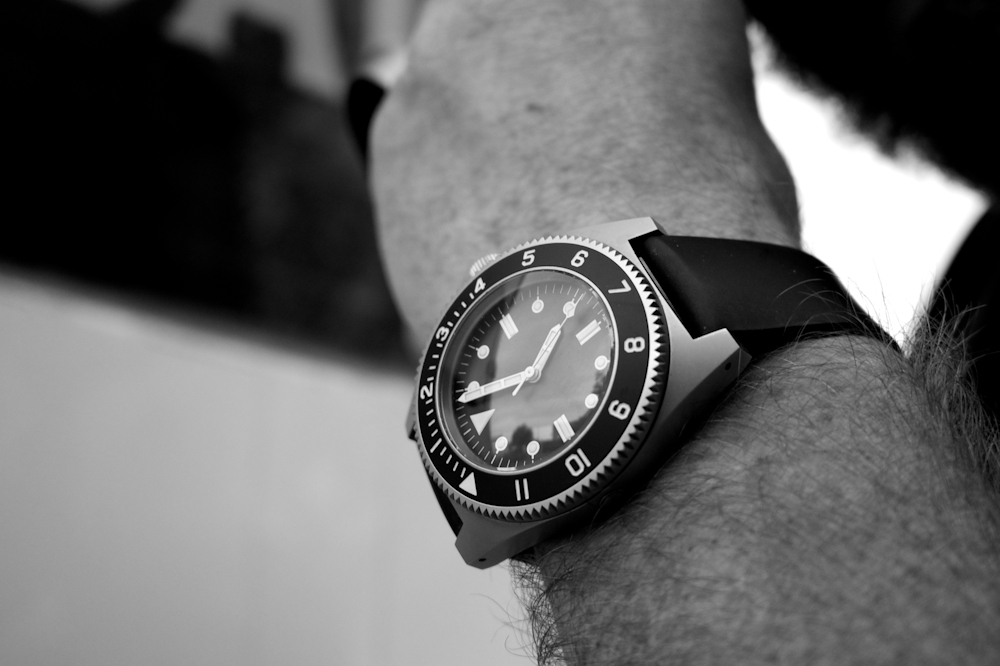
It’s only natural to think of watches as accessories. They’re chosen for their design, craftsmanship or perhaps the name on the dial. But for much of their history, watches have been practical tools that helped solve some very real problems.
In many cases, advances in watchmaking haven’t simply changed the way we tell the time. They’ve changed the way we travel, work, explore and organise our lives. So, rather than looking only at the most famous watches ever made, let’s explore the timepieces and innovations that helped shape life as we know it today.
Railway Watches and the Birth of Standardised Time
Before standardised time, towns across the UK generally kept their own local time, based on the position of the sun. The difference between neighbouring towns might only have been a few minutes, but as railway networks expanded during the 19th century, those minutes started to matter.
Trains needed reliable timetables, and passengers, stationmasters and railway workers all needed to agree on what, say, 10:30 actually meant. In response to this, railway companies began adopting a common standard based on Greenwich Mean Time (GMT), often referred to as “Railway Time”. By the mid-19th century, GMT was increasingly replacing local time.
Accurate personal timekeeping was also important for railway safety. Railway employees relied on dependable pocket watches to keep trains running according to schedule and coordinate movements across the network. When two trains were using the same track, a watch that was several minutes slow could become more than an inconvenience.
The railways helped change our relationship with time itself. Instead of each community operating according to its own clock, society began running according to shared hours and precise minutes. That shift seems completely ordinary to us now, but much of our lives depend on it.
Wristwatches and the Changing Experience of War
For much of the 19th century, a gentleman’s watch belonged in his pocket. This worked perfectly well in everyday life, but it wasn’t especially practical on a battlefield.
Reaching into a pocket, removing a watch and opening its cover took time and occupied a hand. Not ideal when handling equipment or carrying a weapon.
Military use helped demonstrate the advantage of having the time immediately visible on the wrist. Although wristwatches existed before the First World War, the conflict greatly increased their practical importance.
On the battlefield, knowing the time wasn’t just about punctuality. Precise timing could be essential to coordinating an operation.
Officers could synchronise their watches before an attack, allowing different units to act at an agreed time without needing a last-minute signal that could be missed or noticed by the enemy. Watches were also used to coordinate artillery barrages, troop movements and other timed operations.
The First World War really helped change attitudes towards men’s wristwatches. Before the conflict, wrist-worn watches were often associated with women or treated as something of a novelty.
Their usefulness during wartime helped challenge that convention.
This is a lasting example of practical necessity changing fashion. What proved useful in extraordinary circumstances eventually became completely ordinary.
Aviation Watches Made the World Feel Smaller
For early pilots, checking the time wasn’t as simple as reaching into a pocket. Flying an aircraft demanded both hands and constant attention, making a clearly visible wristwatch a much more practical option.
More importantly, accurate timekeeping was an essential part of early navigation. Before pilots could rely on today’s sophisticated electronic systems, elapsed time could be used alongside speed and direction to estimate how far an aircraft had travelled and where it was likely to be. Keeping track of flight time was also important when calculating fuel consumption.
As aviation progressed, aircraft could travel greater distances at much higher speeds, and commercial air travel created an unusual everyday problem: people could now move between different time zones within a matter of hours.
Watchmakers responded with watches capable of displaying more than one time zone. GMT and dual-time watches allowed pilots to keep track of a standard reference time alongside the local time at their destination. The Rolex GMT-Master, developed in the 1950s in association with Pan American Airways, became one of the best-known examples of this.
Long-distance aviation helped make the world feel considerably smaller. Airline crews crossed borders as part of their everyday work, businesses could operate more easily across continents, and international air travel gradually became accessible to millions of holidaymakers.
Watches evolved alongside this change. Where railway watches helped people share the same time, aviation watches helped them manage different times simultaneously.
Diving Watches Helped Humans Work Beneath the Sea
For divers, knowing how long you’ve been underwater can be life-saving. Time helps divers manage their air supply and plan a safe return to the surface, but ordinary watches weren’t designed to cope with water and increasing pressure at depth.
Purpose-built diving watches helped solve the problem. Improved water-resistant cases protected the movement, while rotating bezels allowed divers to mark the beginning of a dive and quickly see how much time had elapsed.
Early dive watches were closely connected with military and professional diving. In the 1950s, watches such as the Blancpain Fifty Fathoms and Rolex Submariner helped establish the design principles we now associate with the modern diving watch.
Dive watches were part of a wider technological shift that made the underwater world more accessible for work, research and recreation, and these types of watches are still around today, just more advanced.
Watches Helped Us Explore Places We’d Never Been
As explorers ventured into extreme environments, they needed equipment that could remain dependable despite freezing temperatures, moisture, shocks and dramatic changes in altitude. A robust watch was one small but useful part of that kit.
The 1953 British expedition to Mount Everest is a famous example. Watches from both Rolex and Smiths were associated with the expedition, and Edmund Hillary wore a Smiths watch during the successful ascent with Tenzing Norgay. Their achievement also demonstrated how watches could become closely linked with stories of exploration.
Adventure became an important part of watch marketing, creating an association between a rugged watch and a life spent pushing boundaries. Decades later, that idea remains remarkably powerful.
The Space Race Changed What We Expected from a Watch
The Space Race presented watchmakers with an entirely new challenge: creating timepieces capable of performing beyond Earth.
The Omega Speedmaster became the most famous example after being qualified by NASA for crewed space missions and accompanying astronauts during the Apollo programme.
Its role became particularly significant during Apollo 13 in 1970. Following an oxygen tank explosion that crippled the spacecraft, astronaut Jack Swigert used his Speedmaster to time a crucial 14-second engine burn that helped keep the spacecraft on the correct course for its return to Earth.
Apollo 13 demonstrated the value of having a simple, independent backup when more sophisticated technology encounters problems, and there’s an interesting parallel today. Our phones, computers and countless other devices can tell us the time, yet millions of people still choose to wear a watch.
More Than Just Keeping Time
Watches have played a small but significant role in some of the biggest changes in life.
What makes their history particularly interesting is that many important watch innovations began with a practical problem. Society found new ways to travel, work or explore, and watches evolved to keep up.
Today, we may no longer depend on a mechanical watch to navigate an aircraft or time a dive, but the designs created for those purposes have endured.
Ultimately, the watches that changed the way we live aren’t necessarily the rarest or most expensive. They’re the ones that show just how closely the story of watchmaking is connected to our changing relationship with time, technology and the world around us.