
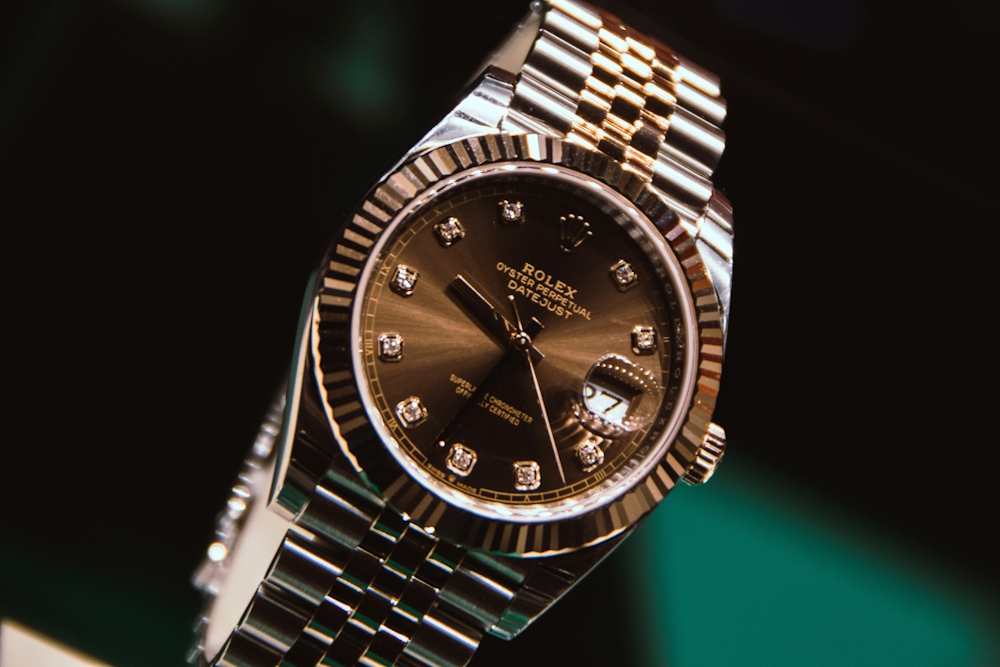
A quick glance at two watches might not reveal much difference, so it’s easy to assume that the price gap comes down to a name on the dial, but the reality is far more nuanced.
In this guide, we’ll look beyond branding to unpack what actually makes a watch expensive.
The Movement: The Heart of the Watch
At the core of every watch is its movement, the mechanism that powers it and keeps time.
Broadly speaking, movements fall into three categories:
- Quartz (battery-powered)
- Mechanical (hand-wound)
- Automatic (self-winding).
Quartz watches are typically more affordable due to their simplicity and mass production, while mechanical and automatic movements are prized for their intricate engineering and craftsmanship.
Watches with in-house movements, developed and produced by the brand itself, often command higher prices due to the expertise and investment involved.
Materials Matter
The materials used in a watch are a big deal in terms of price and performance.
Entry-level models often use stainless steel, while higher-end watches may incorporate titanium (lightweight and strong), ceramic (highly scratch-resistant) or precious metals like gold and platinum.
Even the watch glass varies, with sapphire crystal offering superior scratch resistance compared to mineral glass or acrylic.
Craftsmanship and Finishing
Beyond materials and mechanics, the level of craftsmanship also influences a watch’s price.
Luxury watches are often hand-assembled and finished by skilled watchmakers, rather than mass-produced on assembly lines. Techniques such as fine polishing, brushed finishes and intricate engraving require time, expertise and attention to detail.
Additional features like skeleton dials or exhibition case backs, which showcase the movement inside, further highlight the artistry involved.
Complications: More Than Just Telling Time
In watchmaking, a “complication” refers to any function beyond simply displaying the time.
Common examples include chronographs (stopwatches), moonphase indicators, perpetual calendars and highly complex mechanisms like the tourbillon.
Each additional complication requires extra components and intricate engineering, increasing both the difficulty of production and the cost.
Accuracy and Certification
Accuracy is a defining feature of any quality watch, but achieving consistently precise timekeeping requires careful engineering and rigorous testing.
Some watches are certified by organisations such as COSC, which subjects movements to strict performance standards before awarding them “chronometer” status.
This level of testing and quality control ensures reliability under various conditions, but it also adds to production costs.
Limited Production and Exclusivity
Scarcity is a powerful driver of value in the watch world.
Limited editions and small production runs create a sense of exclusivity, often making certain models highly sought after by collectors.
When supply is restricted and demand is high, prices can rise in a big way.
Resale Value and Investment Potential
Some watches are known for holding, or even increasing, their value over time, but this depends on several factors.
Brand demand, overall condition and rarity all matter when it comes to determining resale potential.
However, it’s important to keep expectations realistic. Not every expensive watch will become a valuable investment. While certain models may perform well in the secondary market, most watches should be purchased for personal enjoyment first, with any future value seen as a potential bonus rather than a guarantee.
In Closing
While a brand name can definitely influence the price of a watch, it’s only one part of a much bigger picture.
Understanding the various elements that impact cost not only helps explain the price differences you see but also allows you to appreciate the skill and engineering that go into each timepiece.
Ultimately, the “right” watch isn’t simply the most expensive one. It’s the one that best aligns with your priorities, whether that’s precision, design, heritage or long-term value.